News
Keeping you up to date on news, events and what’s happening at ESG…

Keeping you up to date on news, events and what’s happening at ESG…
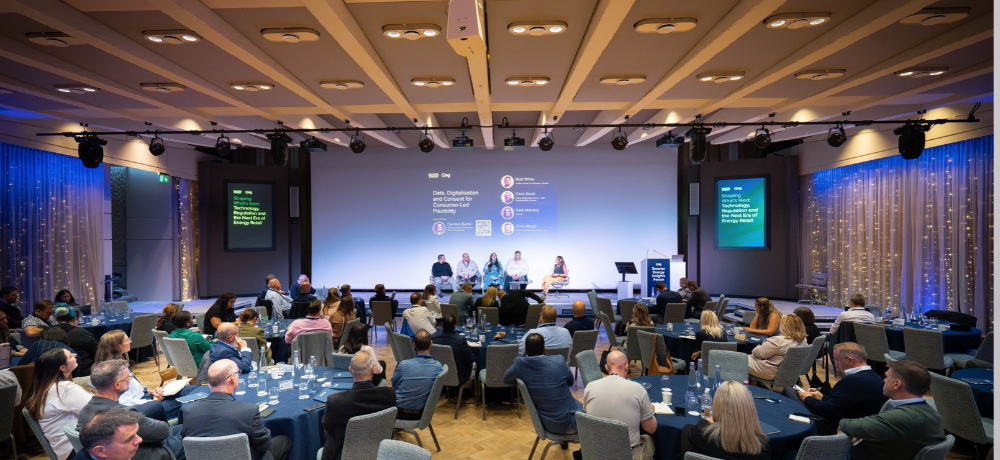
Now in its twelfth year, ESG’s Smarter Energy Insights Forum returned to London on 16th September 2026, bringing together more than 100 delegates from across suppliers, networks, regulators, government and technology providers.
This year’s theme, “Shaping What’s Next: Technology, Regulation and the Next Era of Energy Retail,” set the tone for a day that moved from strategic policy-setting through to the practical realities of delivering change on the ground.
What emerged was a picture of an industry at a genuine inflection point: one where digitalisation, flexibility and data are no longer emerging concepts but active, funded programmes with real deadlines attached.
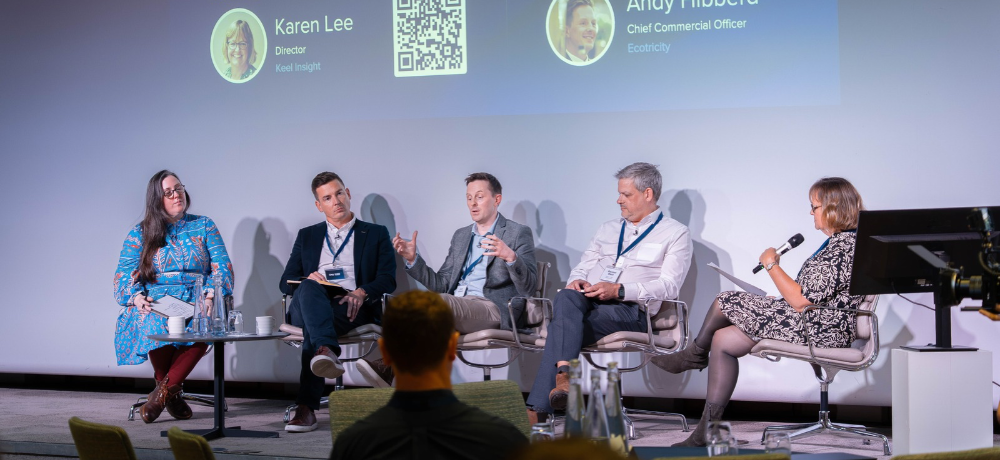
The morning opened with the Energy Digitalisation Framework, published jointly by government and Ofgem in March. Representatives from the Department for Energy Security and Net Zero, Ofgem, NESO and the Smart Energy Code Company set out how the framework is intended to bring coherence to what has historically been a fragmented landscape of codes, standards and initiatives.
The framework rests on four data domains:
Each domain is overseen by a domain coordinator responsible for agreeing consistent standards within that space.
A digitalisation board has been established to provide strategic oversight, alongside a delivery group that brings the domain coordinators together to resolve cross-domain issues.
A further consultation on an enduring digitalisation coordination function is expected later this year.
Speakers were candid that governance complexity is itself a live challenge: with multiple codes, multiple coordinators and overlapping responsibilities, avoiding duplication while still enabling pace was described as a genuine balancing act throughout the day.
Alongside the framework, there was coverage of upcoming work stemming from the Data Use and Access Act 2025, which brings smart data scheme powers (modelled on open banking) into the energy sector. Early benefits assessments point to billions of pounds of potential net social value by the early 2040s, with a consultation on secondary legislation expected later this year.
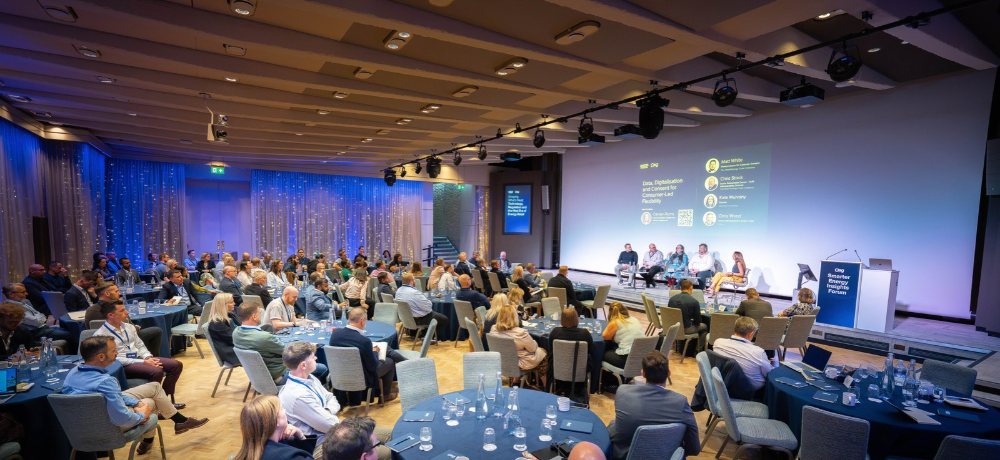
Ofgem’s contribution focused on the practical mechanics of turning data-sharing ambitions into reality. Data best practice principles, introduced a few years ago, were described as the foundation: data should be well governed and presumed open unless a security, commercial or GDPR concern applies.
Building on that foundation, two major infrastructure projects are now moving from concept to delivery.
The Data Sharing Infrastructure, coordinated on an interim basis by NESO, is often described as the “connective tissue” between energy sector participants. It’s a secure, standardised way of moving data between organisations without duplicating existing platforms.
Testing begins this November with up to fifteen participating network organisations, ahead of an MVP release for trial in Spring 2027 planned for spring 2027 and a public beta in Spring 2028.
NESO speakers were clear that this isn’t an innovation pilot but a permanent, business-as-usual capability being built for the whole sector, with use cases so far including regional energy system planning, regulatory-grade gas reporting, and support for renewables planning in Wales.
Running in parallel is the Consumer Consent Solution, which will allow individuals to grant permission for third parties (price comparison sites, Citizens Advice, innovative service providers) to access their energy data, in a similar way to open banking consent journeys. A minimum viable product is targeted for March 2027, with interoperability as the next phase after that.
Perhaps the liveliest exchange of the day centred on how much choice consumers should genuinely be asked to make. While much of the framework is built on an opt-in, consent-driven model, several speakers questioned whether this places an unrealistic burden on ordinary households and businesses.
The argument was made that most people simply want a safe, secure and reliable service rather than a menu of granular decisions to work through, and that no interface design, however well crafted, will persuade the public to spend meaningful time understanding the implications of different data-sharing options.
The counter-view, echoed by several panellists, was that early consumer research shows people become considerably more comfortable sharing data once they understand the value it unlocks. Trusted intermediaries such as Citizens Advice therefore have a significant role to play in building that trust from the ground up.
There was broad agreement, however, that whatever model prevails, the experience needs to be as close to invisible as possible: consumers want the benefits of flexibility and better tariffs without having to actively manage the process day to day.
Two further initiatives were introduced as complementary pieces of the same puzzle. Tariff interoperability aims to make tariff information consistent and machine-readable across the industry, delivered in phases starting with public tariff data before extending into information linked to the Consumer Consent Solution.
Alongside this, a smart data repository is being built to make half-hourly and other consumption data available in a fair, non-discriminatory way, with the first phase due by the end of this financial year and further phases (including assessment and contract data) following over a five-to-six year programme.

The afternoon session brought flexibility into sharper focus, with a detailed account of how EDF’s flexibility business has scaled from early demand-side response trials around a decade ago to a virtual power plant now managing well over 100,000 assets, supported by five and a half gigawatts of contracted battery capacity.
New market roles (including virtual lead party and asset-metered, boundary-point arrangements) were credited with unlocking faster, more granular participation, particularly for sub-meter flexibility ahead of full market-wide half-hourly settlement.
Looking ahead, participants expect flexibility volumes on the system to roughly double over the next five years, driven by grid-scale battery growth and rising electric vehicle numbers. The consistent message was that success depends on making flexibility feel invisible to consumers: giving people control over preferences while the underlying trading and dispatch decisions happen automatically on their behalf.
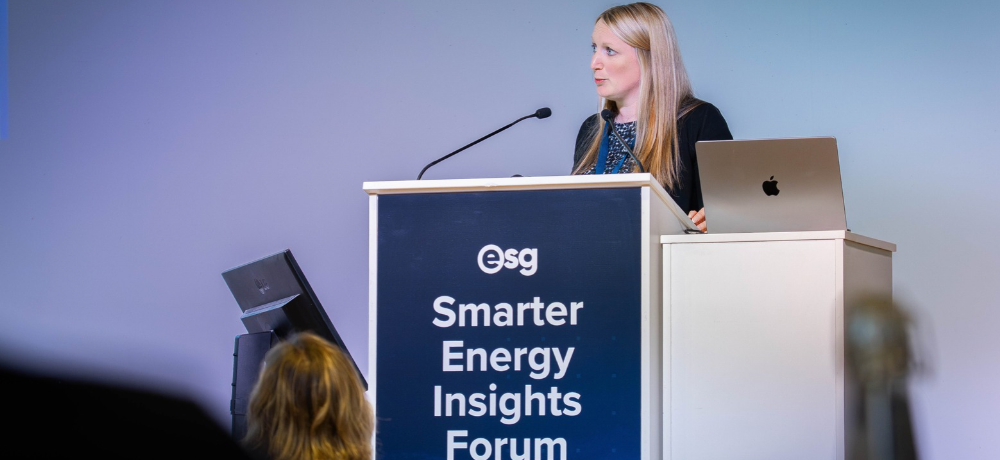
ESG’s own product roadmap session, led by our UK Product Director, set out five core themes:
Two areas received particular attention: progress on market-wide half-hourly settlement and the fast-moving world of flexibility.
The scale of MHHS delivery to date marks a significant milestone, with 1.7 million supplier MPANs migrated through ESG’s services, more than 1.8 million live supplier MPANs and over 4 million live MOP MPANs. But migration is only one part of the transformation.
As volumes increase, the focus is shifting towards operational resilience, managing emerging scenarios and making effective use of richer settlement data. Looking beyond programme delivery, MHHS provides an important foundation for more efficient operations, improved market insight and future innovation.
As flexibility becomes an increasingly important part of the energy market, ESG is evolving its solution to support wider participation, with AMVLP and VLP roles already supported and VTP the next planned capability.
The longer-term ambition is to simplify access to multiple flexibility markets through a more integrated, customer-centric approach, enabling suppliers to manage flexible assets more effectively, develop propositions that deliver greater value to customers, and unlock new revenue opportunities.
The day closed with a candid panel discussion on what distinguishes future market leaders.
Recurring themes included:
Panellists were candid that not every consumer needs to actively participate in flexibility for bills to fall across the board, since even modest levels of engagement can meaningfully reduce network and system costs for everyone.
Across every session, a common thread ran through the day: the infrastructure, governance and standards being put in place now are foundational rather than finished.
Speakers were open about the fact that first iterations of the architecture, the domain coordination model and the consent framework will need refinement as real-world testing begins.
For an industry accustomed to incremental change, the scale of coordinated activity now underway (spanning government, regulator, code bodies and technology providers) marks a distinctly ambitious step towards a genuinely connected, data-driven energy system.
If you’d like to explore how ESG can support your organisation as the energy market evolves, we’d be happy to talk.