News
Keeping you up to date on news, events and what’s happening at ESG…

Keeping you up to date on news, events and what’s happening at ESG…
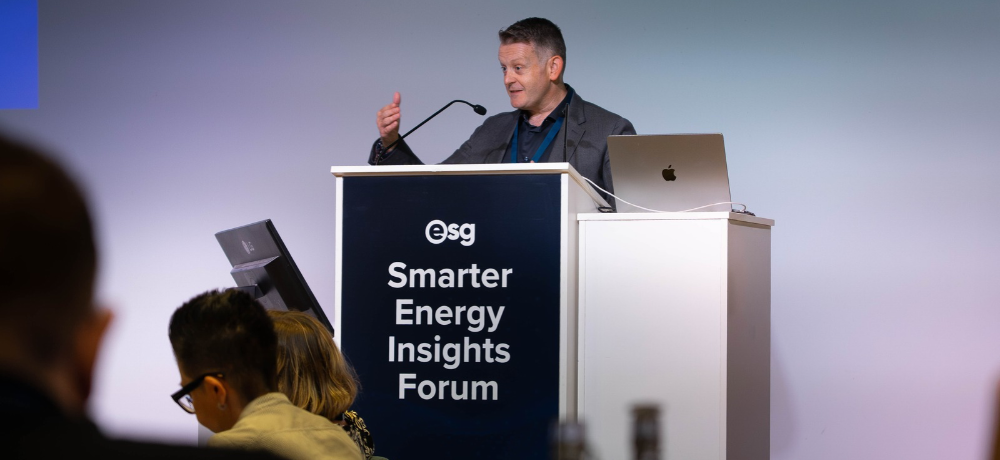
By Matt Hirst, CEO, ESG Global
We recently welcomed more than 100 delegates to the latest Smarter Energy insights Forum. It was a room filled with representatives from suppliers, metering companies, renewable providers, policymakers, regulators, industry bodies, consultants and technology experts.
The whole market was in the same place, ready to talk.
Our goal was to provide fresh insights, useful questions, new connections and a little more clarity about what lies ahead for the UK Energy Industry. Having now had time to reflect, I think the day delivered on that, and it reinforced several things I’ve believed for a long time.
I’ve worked in the energy market for over 26 years. When I began, UK domestic competition had only just opened up, and the industry was still working out what customer choice and supplier switching really meant. Many suppliers only thought about winning customers.
Almost none had considered what would happen when they started losing them. Lots of businesses employed small armies of people to create data flows by hand, and that gap gave rise to the first iteration of our Automated Flow Management Solution. Nobody had thought to automate losing customers as well as winning them.
I mention this because the industry now has to deal with far more than just winning and keeping customers. We now talk about market-wide half-hourly settlement, consumer-led flexibility, smart tariffs, distributed assets, interoperable systems and AI.
Yet the fundamental challenge is the same as it was in those early days: how do we turn complexity into something that works reliably for businesses, energy companies and, ultimately, consumers?
That question ran through every session of the day.
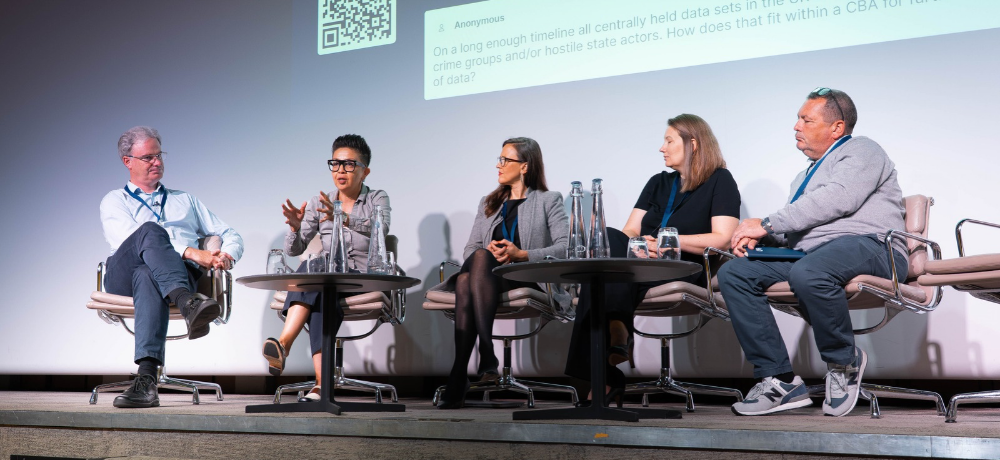
The morning was devoted to the Energy Digitalisation Framework, and it was one of the most joined-up conversations I’ve heard in this industry. Representatives from government, regulators, National Energy System Operator (NESO) and Smart Energy Code Company (SECCo) each explained their part in building a connected, flexible and digital energy system.
We had a senior representative from the Department for Energy Security & Net Zero (DESNZ), who set out the strategy and its governance, while Ofgem reinforced this with their intentions for regulating the common digital infrastructure.
This was followed by representatives from NESO, who walked us through the Data Sharing Infrastructure (DSI), now moving towards testing with 15 organisations in November 2026, followed by MVP wider release in Spring 2027 and a public beta planned for 2028.
NESO made a point that I suspect stuck with many people. Infrastructure gets the attention, but the real challenge is the data itself, with all its history, its multiple languages and its assumptions. Getting the language right comes before getting the technology right.
SECCo’s representative laid out a theme I wholeheartedly share: reuse. With more than 40 million smart meters installed and a secure, battle-tested network already in place, the industry has to be disciplined about not building things twice. As she put it, duplication simply costs consumers twice.
This matters to me because we sit in the middle of this ecosystem. Our customers cannot afford to treat digitalisation as a series of separate projects. Data standards, consent, tariff interoperability, settlement and flexibility all connect to one another, and the organisations that thrive will be the ones that see them that way.
When the architecture is coherent, complexity becomes manageable. When it isn’t, cost and risk pile up quietly.
But while the framework is in place, it’s clear it’s very much a first iteration. There’s a shared acknowledgement that it needs to get better through consultation and challenge.
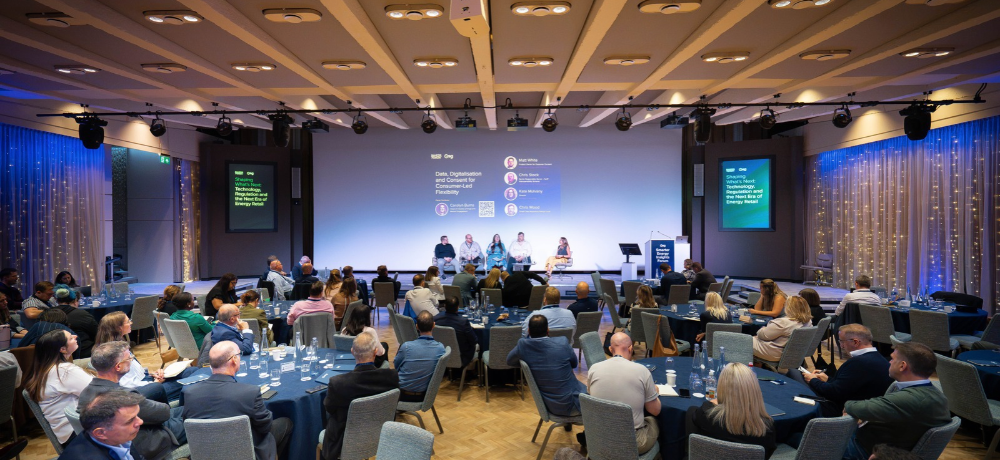
After lunch the conversation moved closer to delivery. ESG’s own Carolyn Burns began her panel with a stand-up, sit-down exercise that told its own story. Most of the room had a smart meter, followed by a PHEV or EV, but far fewer people had a smart appliance, a heat pump or a battery.
In a room full of industry experts, that gap is very noteworthy. If the Industry experts are struggling to engage the consumer-led flexibility we’re designing for, we shouldn’t be surprised that it’s hard to scale in the wider population.
The panel made clear there’s a tension at the heart of consumer consent. Retal Energy Code Company (RECCO) representatives explained how the consumer consent solution, whose first release is due in March 2027, will take an open-banking-style approach.
This means consent that’s simple, recognisable and reusable across services, while tariff interoperability aims to remove friction that should never have existed.
This was reinforced by Elexon outlining the potential of the Smart Data Repository to support this initiative.
But the panel also offered a valuable counterpoint, with the question on whether we can realistically expect people to give meaningfully informed consent to something so technical, and reminding us that for most people the ideal outcome is flexibility that is passive, safe and invisible.
That debate isn’t one we fully resolved on the day, and I don’t think it should be yet. But it points to a principle I hold firmly. Our job as an industry is to absorb complexity so that consumers don’t have to. The best technology is the technology people never notice.
EDF’s session brought this to life. They’ve been on a journey from six-megawatt projects to 500-megawatt-plus schemes, and from a few hundred megawatts of grid-scale battery storage to around eight gigawatts.
EDF now has 130,000 assets on its virtual power plant. What resonated most was his reminder that flexibility works when customers have control but their daily lives don’t change.
I’m proud our Flexibility experts have been critical in helping EDF secure its asset-metering virtual lead party accreditation. It’s a good example of what happens when deep market knowledge and the right technology come together.
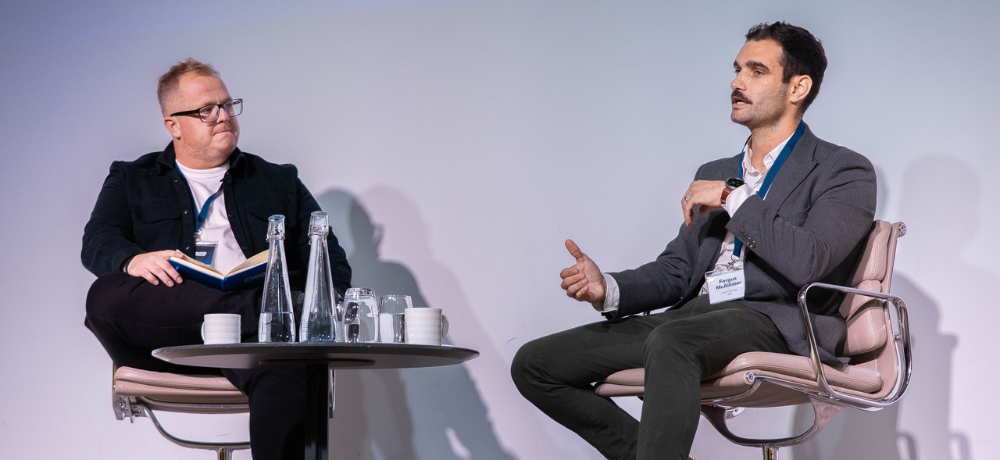
To close out the day, we presented a panel that asked “what will set future leaders apart?”, and the answers were refreshingly practical.
It’s clear there’s no silver bullet.
They talked about being clear about your proposition and who you serve, while communicating honestly and transparently with customers. They also talked about keeping enough agility to respond to shocks and policy shifts that nobody can predict.
These themes echo our own roadmap, which UK Product Director Kate Barnes presented earlier in the afternoon.
It’s built around five themes:
The organisations we work with are facing growing regulatory obligations and rising data volumes without a matching growth in operational capacity. Automation isn’t a nice-to-have in that environment. It’s what keeps businesses steady.
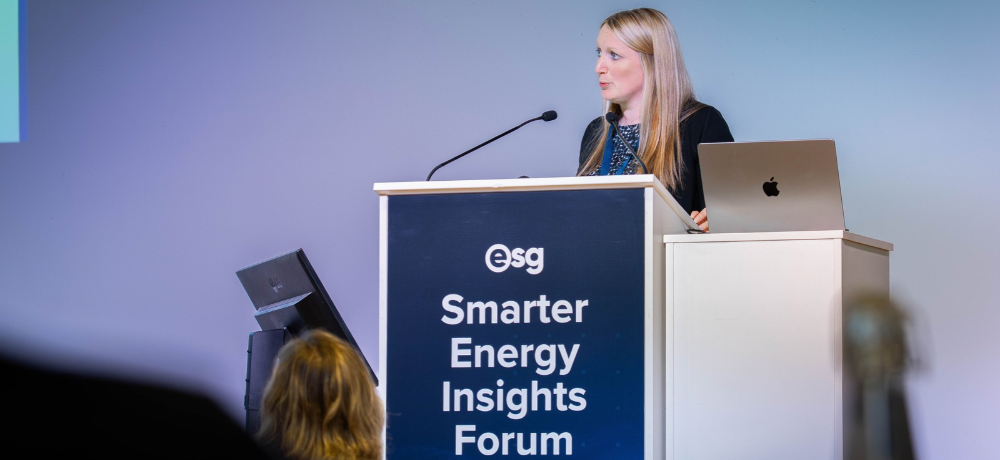
Among the many take aways from SEIF 2026, there are four that I think are most prominent.
Every conversation, from the framework to consent to flexibility, came back to data: its quality, its context and how it’s shared. Businesses that treat data as a strategic asset, with a clear view of what they’ll do with it, will be well placed.
Systems, standards and consent journeys can be as sophisticated as they need to be, provided that complexity is masked from the consumer.
Regulators, code bodies, domain coordinators, suppliers and technology providers openly recognised that nobody can deliver this alone.
That’s the spirit I hope we keep.
We live in an increasingly automated world, and AI is already changing our market. But progress still depends on human curiosity, and on deep, hard-won energy knowledge. That knowledge sits in our teams and our partners, and in every person who took a day out of a busy schedule to join us.
At ESG, we want to help complex energy businesses gain an edge, not through technology alone, but by combining technology, data, industry knowledge and human experience. Events like SEIF remind me why that matters. The market is changing quickly, the challenges are real, and the direction is clearer than it has been for some time.
I’d like to thank everyone who joined us, every speaker and panellist who gave their time so generously, and our teams for making the day run so smoothly.
If you’d like to explore anything from the day, or share what you think we’ve missed, please feel free to reach out to me on LinkedIn.